
A few weeks ago, at the beginning of a long debate between anthropologist Chris Kavanagh and secular guru Sam Harris over how tribalistic Harris is or isn’t, Harris posed this challenge to Kavanagh (who was taking the “is” side of the debate): “I’d just ask you… what is my tribe?” At the end of the debate, Harris, confident that the question hadn’t been satisfactorily answered, said with an air of triumph, “I look forward to hearing the name of my tribe, after all of this.”
I thought that had a familiar ring, and, sure enough, it turns out that in 2018, after I wrote a piece for Wired saying Harris is more prone to the psychology of tribalism than he realizes, he tweeted this about the piece: “Any honest journalist would notice that @ayaan, @MaajidNawaz, and @sullydish are among the people I most often promote and defend (and who most often promote and defend me). So, Robert, what's my ‘tribe’?”
Harris’s question—“What’s my ‘tribe’?”—made no evident sense as a response to the critique in my Wired piece, as I’ll explain below. And I don’t think his question gets at the core of the critique that Kavanagh was making. More important, I think his question reflects a not very helpful way of thinking about the much discussed “problem of tribalism.” It’s a way of framing the problem that in some ways makes it harder to address.
In last Monday’s issue of the newsletter, I used the Harris-Kavanagh debate—which took place on the podcast Decoding the Gurus, co-hosted by Kavanagh and psychologist Matthew Browne—to highlight some ways people can be commendably anti-tribal or deplorably tribal (using Harris as exhibit A in both cases). But I didn’t explicitly address the question of what I meant by “tribal.”
I’ve since realized that saying more about what I mean by that term—and what that meaning implies about the dynamics of “tribal psychology”—might be helpful for some people as they try to do fewer deplorably tribal things and more commendably anti-tribal things. So now I’m going to lay out that meaning, and contrast it with the meaning that Harris seems to have in mind, and explain why I prefer my meaning to his.
But first I should say I’m actually not a big fan of the term “tribalism.” It has, among other problems, a tendency to foster misconceptions about the thing it refers to. But I use the term, and I’ll continue to use it, because at this point it’s firmly ensconced as the standard label for an important phenomenon. Trying to dislodge it would be a fool’s errand even if I could think of a better label—which, actually, I can’t.
What I can do is put the term’s badness to good use. My plan here is to list a number of unfortunate things about the term—mainly ways in which it misleads us about the thing it’s a label for. In the process of filing those complaints, I’ll try to close in on a clearer conception of the thing itself. So here are five unfortunate things about the currently popular use of the term tribalism, along with some commentary and some closing thoughts on the meaning of the term.
1. The term “tribalism” can offend people, notably including some people who identify with actual, literal tribes, in the traditional sense of the term. And I can see why. There are lots of things that happen within traditional tribes—beautiful things, inspiring things, boring things, annoying things, mundane things. So it must feel disconcerting, if you’ve experienced all those things, to see the term “tribalism” referring to none of them and instead referring to something that isn’t a very common part of life in the average tribe: fighting with other tribes. All the more so since focusing on this one dimension of tribal life reinforces stereotypes of traditionally tribal people as morally primitive or barbaric.
I guess you could make a superficially similar complaint about the term “nationalism.” Lots of good things happen within nations, yet “nationalism” is often used to connote the darker side of national allegiance. On the other hand, “nationalism” isn’t used metaphorically, the way “tribalism” is, to refer to the darker side of all kinds of groups—ideological groups, religious groups, and so on. “Tribalism,” as used these days, makes the traditional tribe a generic icon for groups behaving badly.
I hope that by the end of this piece it will be clear that the phenomenon that is labeled, however unfortunately, “the psychology of tribalism” doesn’t reflect badly on traditional tribes, at least not as I conceive it. I see this psychology as the expression of a universal human nature, a reminder that people everywhere, in all kinds of societies, are fundamentally the same, capable of good and bad behavior, depending on the circumstances.
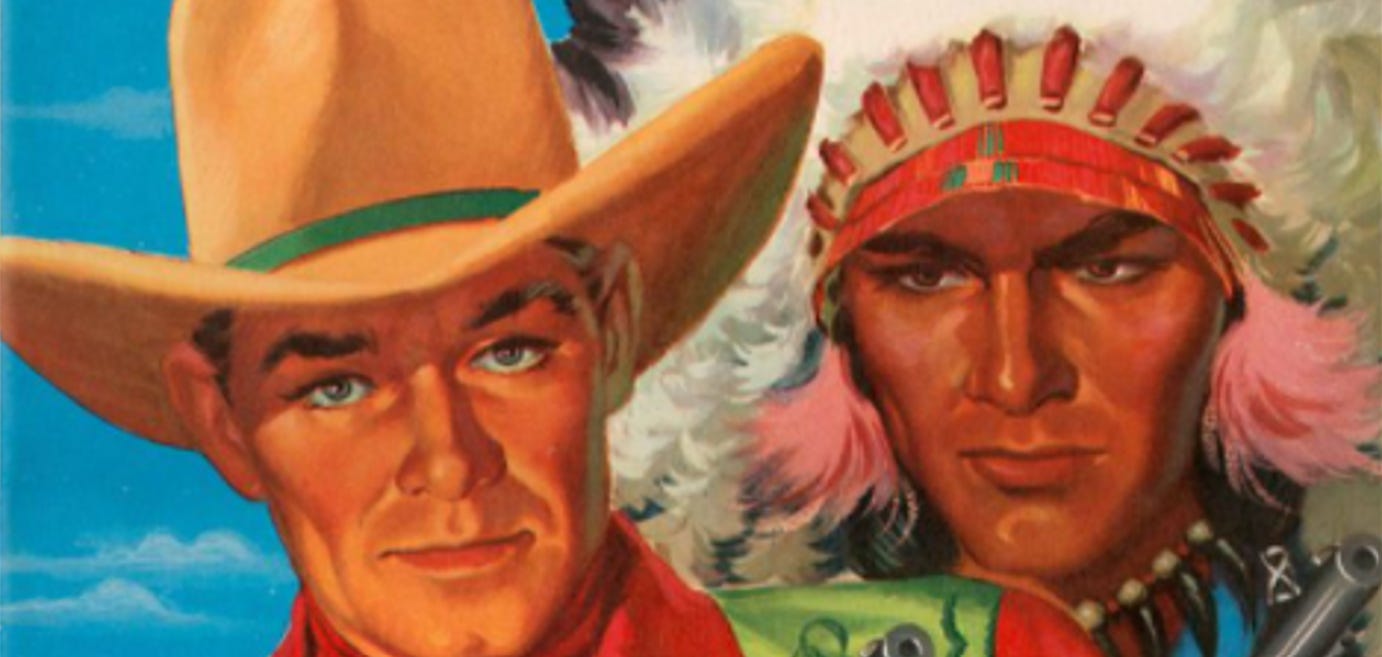
2. The term “tribalism” suggests that each person has only one tribal allegiance. In the cowboy movies I watched as a kid, there were Apaches, Comanches, Cherokee and so on, but there weren’t people who used more than one of those labels.
Sometimes, when I hear Sam Harris ask “What is my tribe?” I wonder if he’s watched too many cowboy movies. Shouldn’t it be obvious that, when “tribe” is applied metaphorically, people can have multiple tribes?
Certainly that was the way I used the term in the Wired piece Harris thunderously denounced without, apparently, reading it carefully. I argued that his membership in several different “tribes” had, in different ways, warped his view of the world. (Which happens to all of us—I only focused on him because he keeps saying it happens barely at all to him.)
One of these tribes was the “new atheist” tribe that was a central part of Harris’s identity when he first gained fame two decades ago. I suggested that this identity had led Harris to unfairly characterize a periodical that had published a damning piece about a fellow new atheist. Another of these tribes was the “pro-Israel” tribe. I argued that this tribal identity distorted his view of Palestinians. (I use ‘pro-Israel,’ as it’s often implicitly used, to refer to the more ardent, often right-leaning pro-Israel factions, not to all Zionists or to everyone who wishes Israel well.) A third tribe I linked Harris to you could call the anti-Islam tribe—the tribe Harris signified his membership in by famously writing, “We are not at war with ‘terrorism.’ We are at war with Islam.” I argued that this identity led him to commit a glaring logical error in assessing the causes of terrorism.
Now, obviously, if you’re a member of all three of these tribes, as my Wired piece said Harris is, you’ll have a diverse assortment of tribemates. You’ll have atheists in the new atheist tribe, you’ll have Christians and religious Jews, along with atheists, in the pro-Israel tribe, and you’ll have all those kinds of people, and more, in the anti-Islam tribe.
So it didn’t make sense to me when Harris responded to my Wired piece with a tweet that touted his friendship with a religiously and ideologically diverse array of people—Ayaan Hirsi Ali, Andrew Sullivan, and Maajid Nawaz—and seemed to be challenging me to explain what one thing he and they all have in common. He has different things in common with each of them!
For example, Ali is an atheist former Muslim who, having called Islam a “nihilistic death cult,” fits squarely in Harris’s anti-Islam tribe. Andrew Sullivan, a Christian, sits alongside Harris in a tribe I didn’t mention in the Wired piece: the anti-social-justice-warrior tribe.
It may be that the third person Harris mentioned, Maajid Nawaz, fits into that tribe, too, but I want to emphasize that it doesn’t matter whether he fits into any of Sam Harris’s tribes. There’s no rule that says all your friends have to come from within some identifiable tribe you belong to.
I guess it’s possible that Harris’s tweet wasn’t challenging me to group everyone he mentioned into one tribe. Maybe he just meant that some of the people he mentioned are members of a tribe that opposes one of the tribes I’d placed him in (like Sullivan and Nawaz, both religious, in the case of the new atheists). Well, this riposte, too, is irrelevant to the argument in my Wired piece—which was about the cognitive biases that seemed to be triggered by his tribal affiliations, not about whether those affiliations completely governed his social interactions. But at least this riposte serves as a good transition to my next bullet point:
3. The term “tribalism” misleadingly suggests—to some people, at least—membership in a group with strict internal cohesion and firm borders.
In the average cowboy movie, when you see a tribe’s warriors appear menacingly on the horizon, they seem to have complete unity of purpose and zero interest in making friends outside the tribe. That’s the kind of image that can come to mind when you listen to Harris rebut Kavanagh’s allegations of tribalism. Here’s his basic rebuttal algorithm:
Tell me what tribe you think I’m part of and I’ll give you two pieces of evidence that I’m not part of it: (1) there are people within that tribe that I’ve criticized; (2) there are people in an opposing tribe I’ve been charitable toward.
Harris does manage to cite some such examples. (He has, for example, criticized Bret Weinstein, once considered one of Harris’s “Intellectual Dark Web” tribemates, for going haywire over the Covid vaccine issue.) But these examples aren’t a powerful rebuttal unless you conceive of a tribe as something that commands such comprehensive allegiance that there is no internal disagreement and there are no overtures, ever, to anyone in an opposing tribe. The fact is that all tribes feature intratribal disagreement, and I’m not aware of any tribes with borders so firm that they aren’t ever crossed by overtures of charity or bonds of friendship (except maybe the most extreme religious cults).
Kavanagh tried to convey this general idea to Harris—that the things we call tribes, while possessing enough internal cohesion and unity of purpose to influence our thought and behavior, are fluid and overlapping and have internal tensions and porous bounds. It didn’t seem to work.